Authenticity Alone Won't Sell: Why Unfiltered Brand Personality Drives Customers Away

Tell a room full of marketing consultants to name the single most important quality a brand can possess, and a significant portion will land on the same word: authenticity. It has become the default prescription for every branding ailment, from stagnant engagement to declining trust. Yet a growing body of evidence — drawn from consumer behavior research and real-world brand performance — suggests that authenticity, deployed without discipline, can actively repel the very customers a business is trying to attract.
This is not an argument against genuine brand identity. It is an argument against the assumption that genuine and strategic are mutually exclusive.
The Authenticity Trap
The push toward authentic branding emerged as a reasonable correction to an era of corporate sterility. Consumers, particularly younger American demographics, grew weary of brands that felt manufactured and hollow. They responded warmly to companies willing to show personality, admit imperfection, and communicate like human beings rather than press releases.
But somewhere in that shift, a misunderstanding took hold. Many businesses interpreted authenticity as full disclosure — the branding equivalent of saying whatever comes to mind and calling it honest. Founders began writing unfiltered LinkedIn posts about their struggles. Companies aired internal debates publicly. Brand voices lurched between tones depending on who was managing social media that week.
The result, in many cases, was not deeper consumer trust. It was confusion, alienation, and a measurable decline in conversion rates.
Authenticity without structure is simply noise. And in a saturated marketplace, noise does not build brands — it buries them.
Genuine vs. Strategic Brand Personality: Understanding the Divide
The distinction that separates thriving brands from struggling ones is not whether they are authentic, but how deliberately they deploy their authentic traits.
A genuine brand personality encompasses everything a company actually is: its founding story, its internal culture, its quirks, its contradictions, its values, and its blind spots. A strategic brand personality is a carefully curated expression of those traits — the ones most likely to resonate with a specific customer segment, delivered through channels and language that segment already trusts.
Think of it less as deception and more as editorial judgment. A skilled author does not include every thought they have ever had in a published book. They select, arrange, and refine until the work communicates with precision. Brand personality operates the same way.
Companies that confuse the two often make the same mistake: they treat their internal culture as their external brand without asking whether those two things should be identical.
When Unfiltered Authenticity Backfires
Consider the trajectory of several mid-market American consumer brands that leaned aggressively into unfiltered authenticity during the early 2020s. A number of direct-to-consumer companies, emboldened by social media engagement, began sharing operational struggles, founder conflicts, and supply chain frustrations in real time. The intention was relatability. The outcome, for several of them, was a perception of instability that drove prospective customers toward more composed competitors.
In one documented pattern across the retail sector, brands that frequently posted about their own limitations saw short-term spikes in engagement — likes, shares, sympathetic comments — but experienced lower purchase conversion rates compared to brands that maintained a more composed, confident presence. Consumers may enjoy watching a brand struggle publicly, but they are far less likely to hand that brand their credit card.
This is the paradox at the center of the authenticity debate: emotional resonance and purchasing confidence are not the same thing, and optimizing for one can actively undermine the other.
Calibration, Not Fabrication
The brands that navigate this most successfully do not manufacture false personalities. They audit their genuine traits and make deliberate choices about which ones to amplify, which ones to moderate, and which ones to reserve for internal culture rather than external communication.
Patagonia offers a frequently cited example. The company's environmental convictions are genuinely held — they predate the brand's commercial success and have cost the company short-term revenue on multiple occasions. But Patagonia does not broadcast every internal disagreement or operational imperfection. It selects the authentic traits most aligned with its customer segment's values and presents them with consistency and confidence. The result is a brand that feels deeply real without feeling chaotic.
On a smaller scale, regional American food and beverage brands have demonstrated similar discipline. A craft brewery with a genuinely irreverent internal culture does not necessarily benefit from making that irreverence the centerpiece of every customer touchpoint. For certain customer segments — say, the weekend hobbyist who values quality over edge — a more refined expression of the same underlying personality will outperform the unfiltered version in both loyalty and average order value.
The key insight is that calibration is not compromise. It is precision.
What Strategic Brand Personality Actually Requires
Building a brand personality that is both genuine and strategically effective requires a process most businesses skip: a structured audit of who they actually are, who their target customer actually is, and where those two realities productively overlap.
This is where professional branding firms provide their most significant value. The exercise is not simply a matter of defining adjectives — bold, warm, innovative — and applying them to design assets. It involves:
Segment-specific resonance mapping. Understanding which authentic traits are most likely to build trust and drive action among a defined customer group, rather than assuming universal appeal.
Tone calibration across channels. Recognizing that the same brand personality may need to express itself differently on a corporate website, an Instagram account, and an in-store experience — without becoming inconsistent.
Authenticity editing. Making deliberate decisions about which genuine traits serve the brand's commercial objectives and which ones, however real, should remain internal.
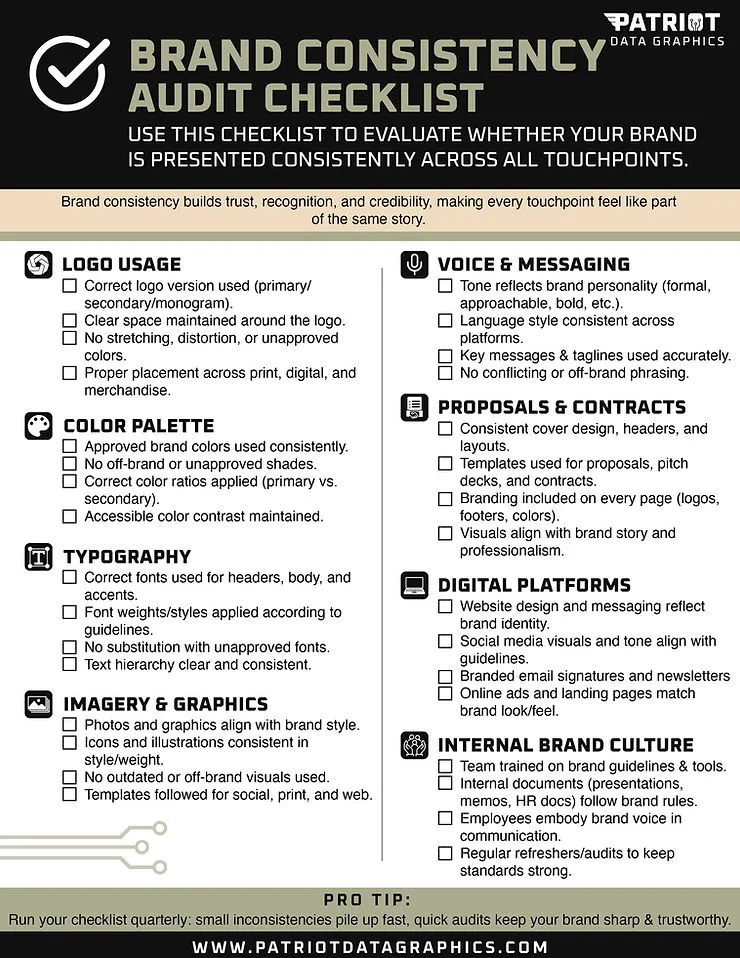
Consistency infrastructure. Establishing guidelines that ensure the calibrated personality is maintained across every team member and touchpoint, preventing the drift that undermines even well-conceived brand strategies.
The Commercial Case for Strategic Personality
None of this is a call for brands to become impersonal or evasive. Consumers remain highly attuned to inauthenticity, and the consequences of being perceived as manufactured are severe. The argument here is narrower: that the path to genuine consumer connection runs through strategic intent, not around it.
Businesses that invest in understanding the difference between who they are and how they should present themselves — and that work with experienced branding professionals to close that gap thoughtfully — consistently outperform those that treat authenticity as a substitute for strategy.
In a marketplace where every competitor is chasing the same directive to "be real," the brands that will distinguish themselves are the ones disciplined enough to be real in exactly the right way, for exactly the right audience, at exactly the right moment.
That is not a contradiction of authenticity. It is authenticity at its most effective.